

NNCI Image Contest 2026 - Whimsical
Most Whimsical
Artists in this category playfully used micro and nanoscale images as the foundation to build scenes. Please check out the images below and read a little about the research behind them.
Vote Here
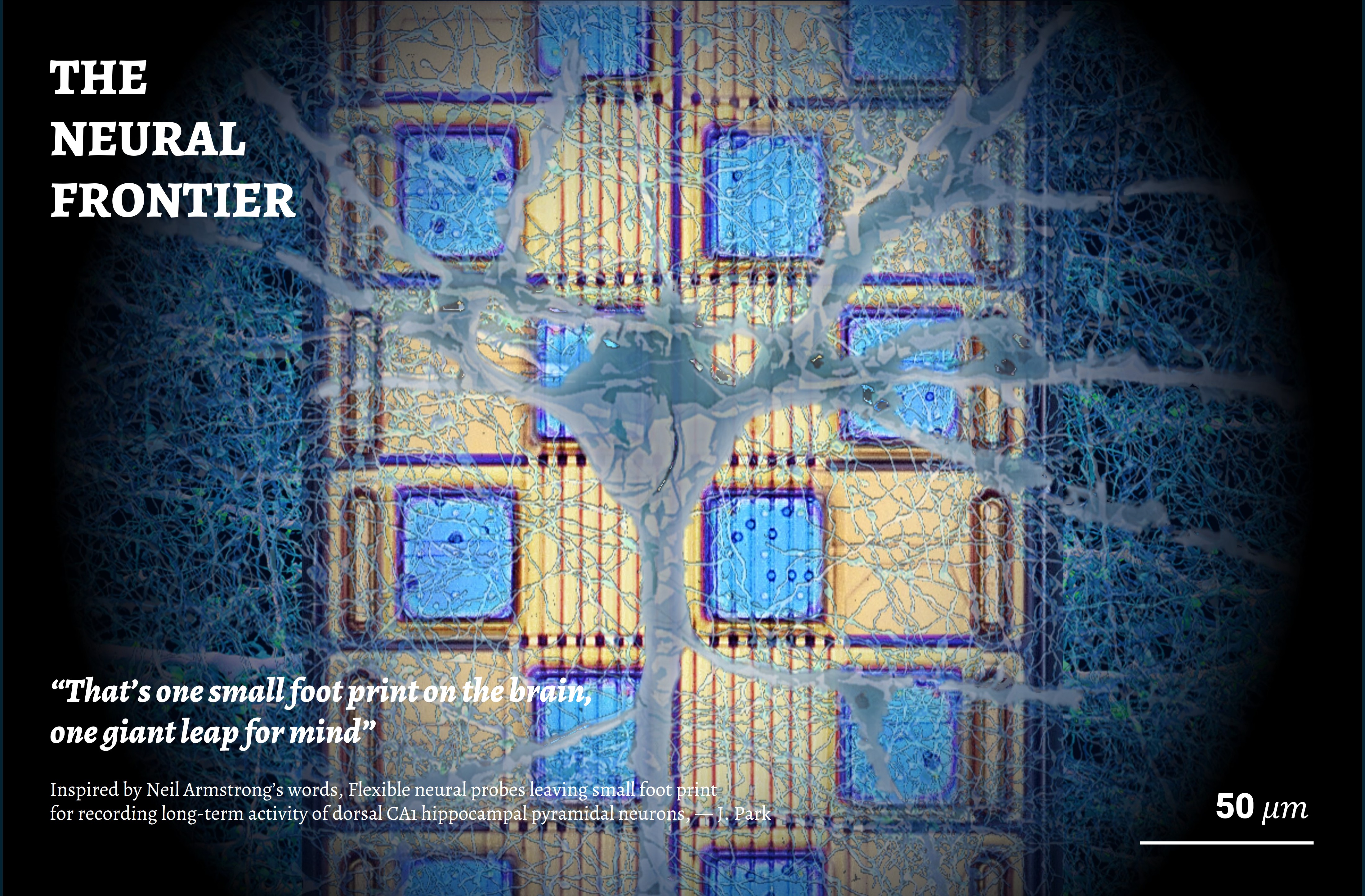
The Neural Frontier
Artist(s): Jaehyo Park (Graduate Student), Azahara Oliva (Professor), & Antonio Fernandez-Ruiz (Professor), Cornell University
NNCI Site: CNF
Tool: Nikon L200 Eclipse Microscope
That’s one small foot print on the brain, one giant leap for mind
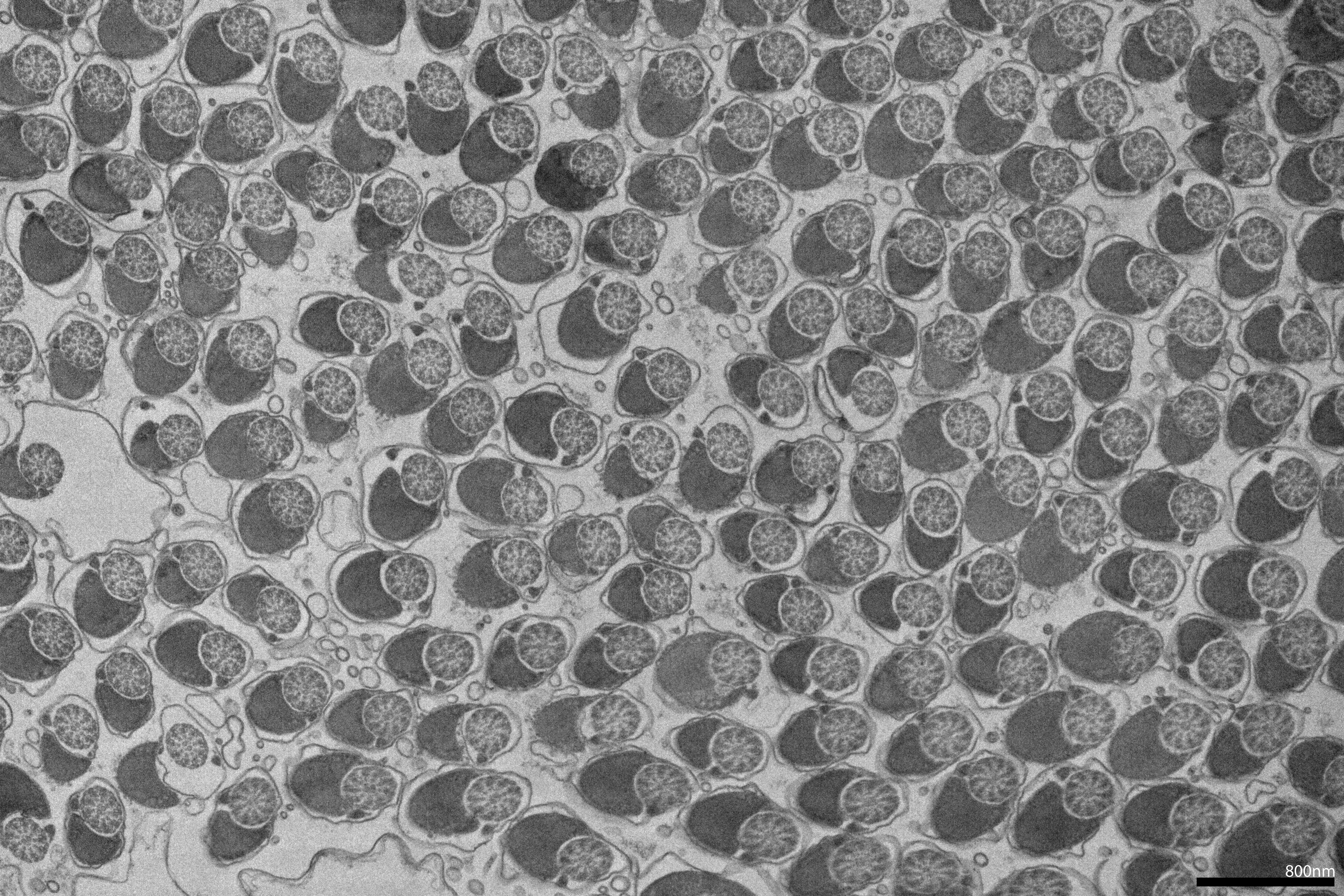
Rush Hour
Artist: Will Sanders, Graduate Student, University of Louisville
NNCI Site: KY Multiscale
Tool: Hitachi TEM- MNTC's BioEM Lab (UofL)
This is a cross-section view of fruit fly sperm tails, magnified 10,000 times with a transmission electron microscope. Each tail appears as a wheel next to a darker bean shape. The wheel is the swimming motor, powered by bean-shaped mitochondrion beside it. This slice was captured from an adult fruit fly testis where sperm are generated from stem cells. Our lab studies what controls stem cell behavior and what goes wrong when that control fails. Because flies share many genetic similarities to people, we can use fruit-fly stem cells as a robust platform for investigating stem cell behavior.
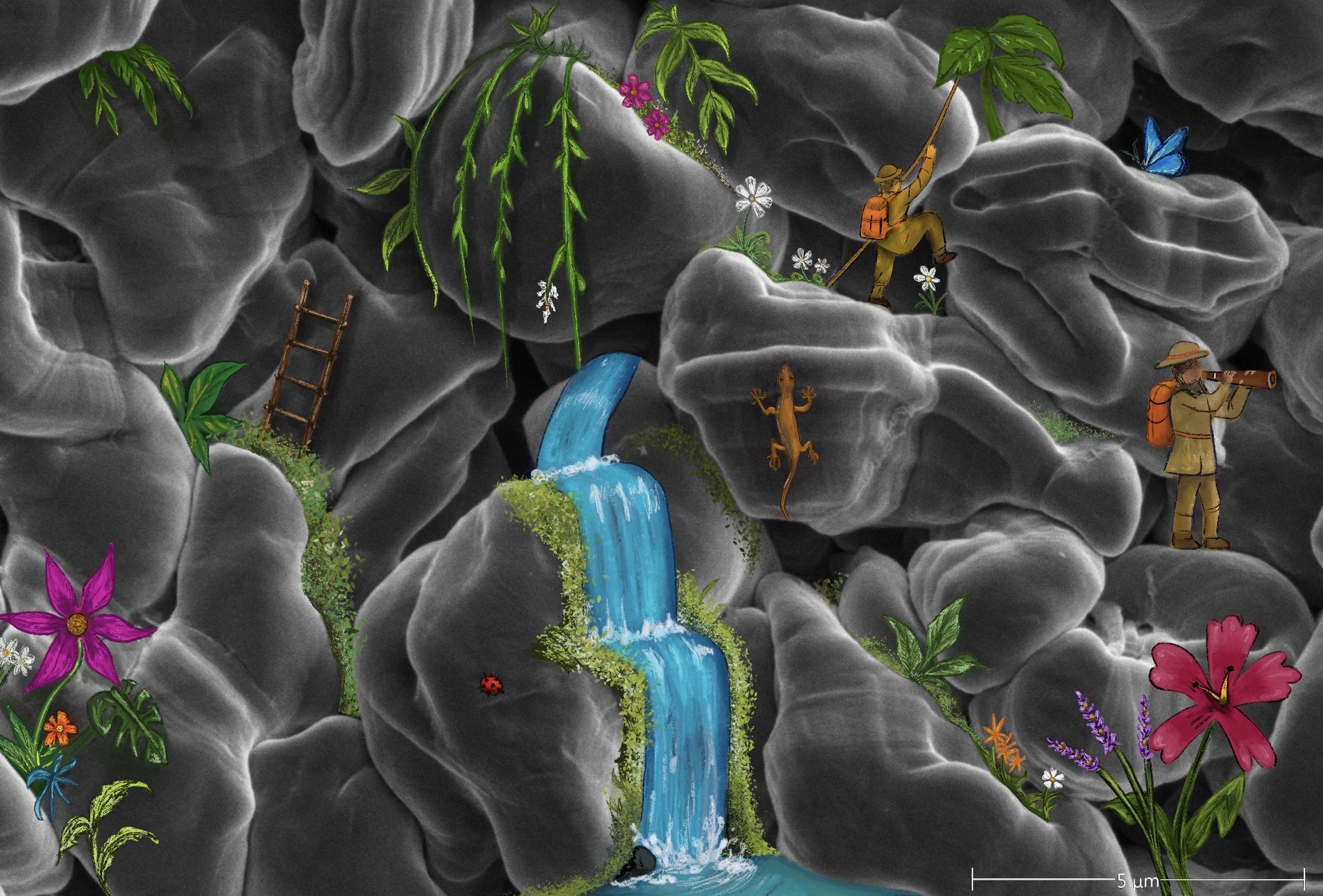
From Pores into Valleys
Artists: Carly Zhang (High School intern in the Bao Lab), Stanford University
NNCI Site: nano@stanford
Tool: FEI Helios 600i scanning electron microscope
A group of explorers makes their way through a rugged landscape of cliffs, waterfalls, plants, and rock formations. The landscape is actually a scanning electron microscope image showing the porous solid-electrolyte interphase (SEI) of a lithium-metal battery. At only a few micrometers across, its ridges and pores become towering cliffs and valleys when viewed at this scale. I imagined the scene as a miniature expedition, adding climbers, explorers searching through the terrain, and plants growing from the crevices. The image reflects our instinct to explore unfamiliar terrain, even when that terrain exists inside something as familiar as a battery.
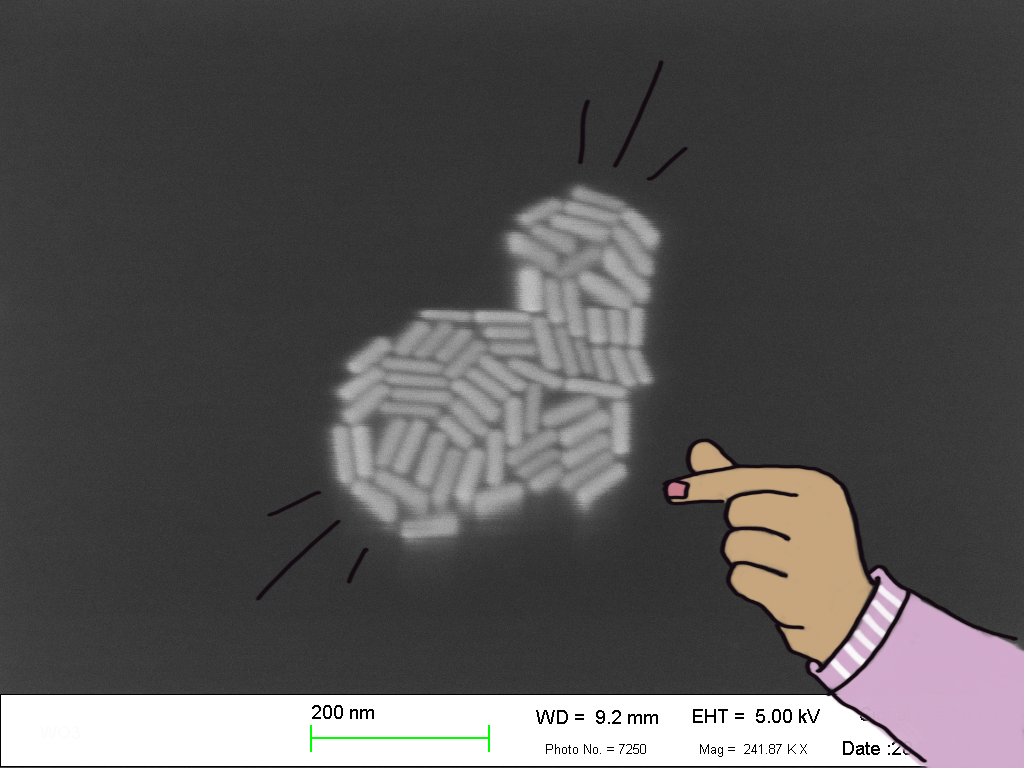
A Golden Heart
Artists: Sonali Srivastava (Graduate student) & Peter Vikesland (Professor), Virginia Tech
NNCI Site: NanoEarth
Tool: JEOL JSM IT-500HR
As a drop of liquid containing gold nanorods dried on a surface, the tiny particles naturally assembled into a heart-shaped pattern. This striking structure was captured using scanning electron microscopy at 241,000× magnification. Although the heart was not intentionally designed, it beautifully illustrates how nanoscale materials can self-assemble into unexpected patterns and gives this image a little extra meaning as a golden thank-you.
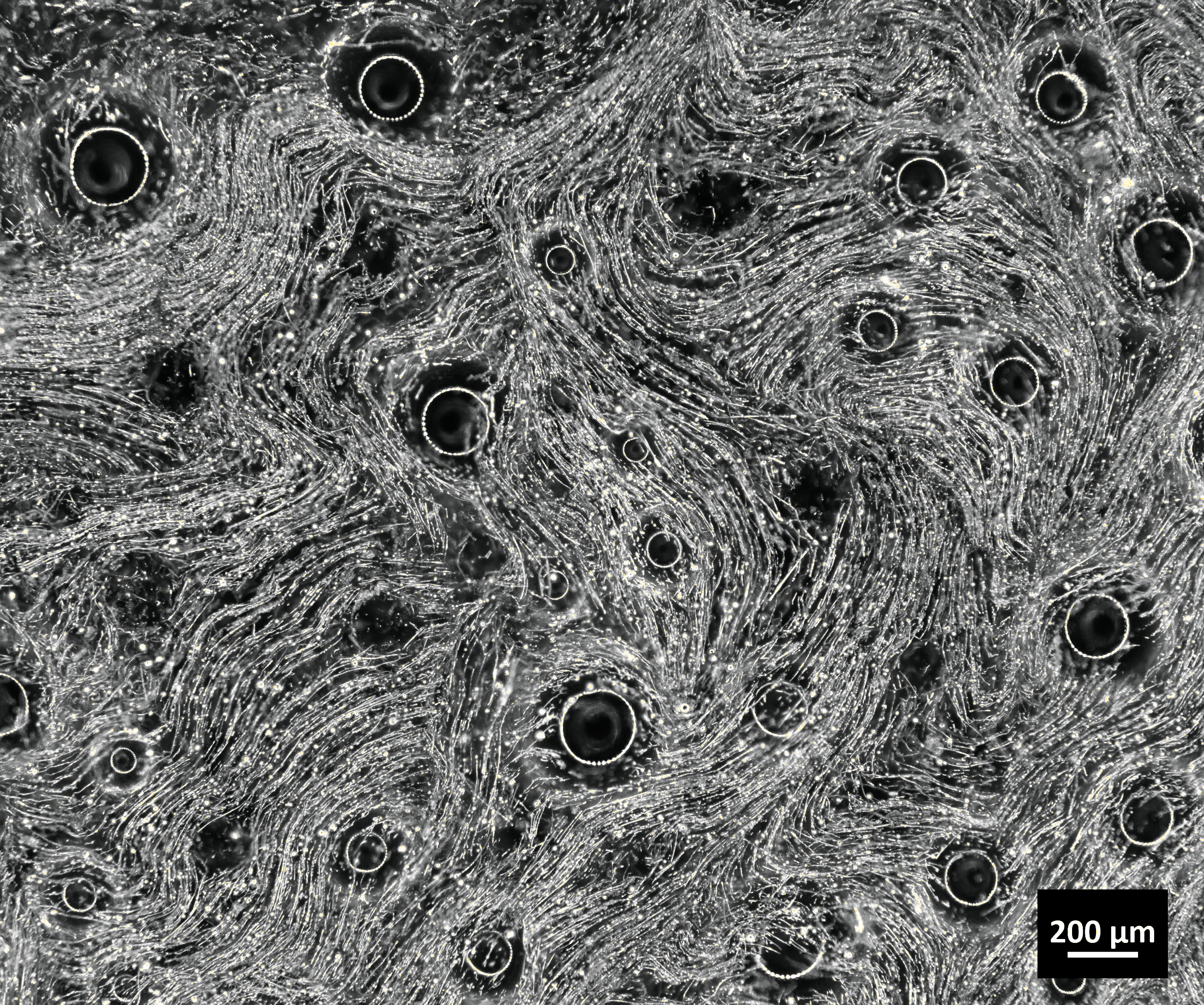
The Art of Alignment
Artists: Andrea Mikulášová (Graduate Student) & CJ McCoy Jr (Graduate Student), University of Nebraska
Tool: Zeiss AXIO Zoom.V16
Liquid metal droplets stretch and align as they flow through a soft, responsive polymer, leaving behind sweeping patterns that look like tiny metallic currents frozen in place. We study how this alignment changes the material’s behavior, but sometimes the flow creates something unexpectedly beautiful along the way.
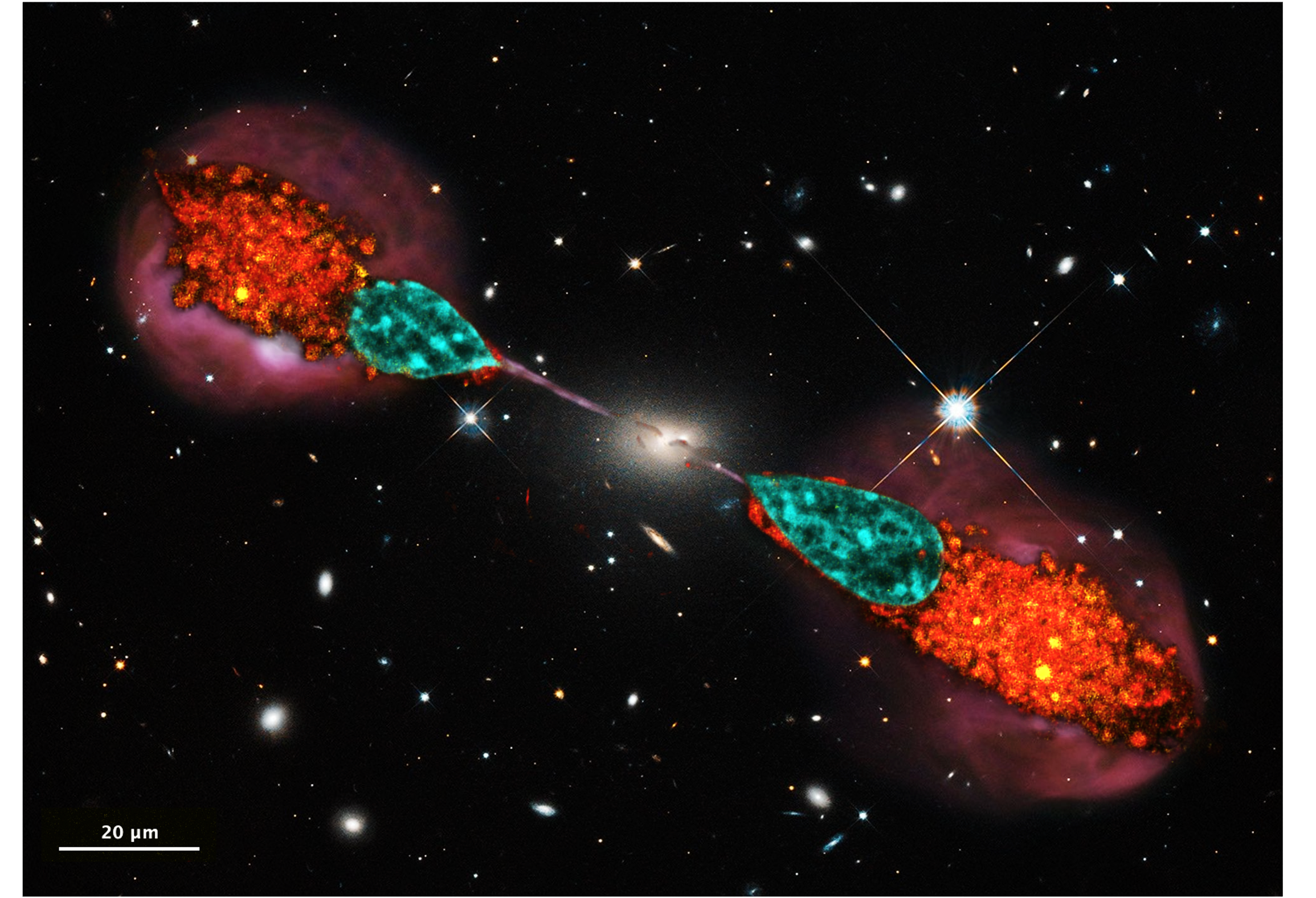
Universal Symmetry, Written in Light and Life
Artists: Mahboubeh Ebrahimian (Graduate Student), Kyle Nowlin (Senior Research Scientist), & Reza Zadegan (Professor), Joint School of Nanoscience and Nanoengineering
NNCI Site: SENIC
Tool: Evident FV3000 Confocal Microscope
As a black hole can be seen giving birth to two plasma jets flung across the cosmos in opposite directions at the speed of light, a mother cell in our own small world divides into two daughter cells, pulling apart until the thread between them breaks. As her precious gift, she gives each daughter a teal jewel of genetic material, so neither forgets where she came from, carrying the legacy forward. Fiery orange marks the machinery making it happen. In this research, yellow DNA nanorobots have the mission to destroy cancer cells while sparing healthy ones, keeping the body's own legacy alive.
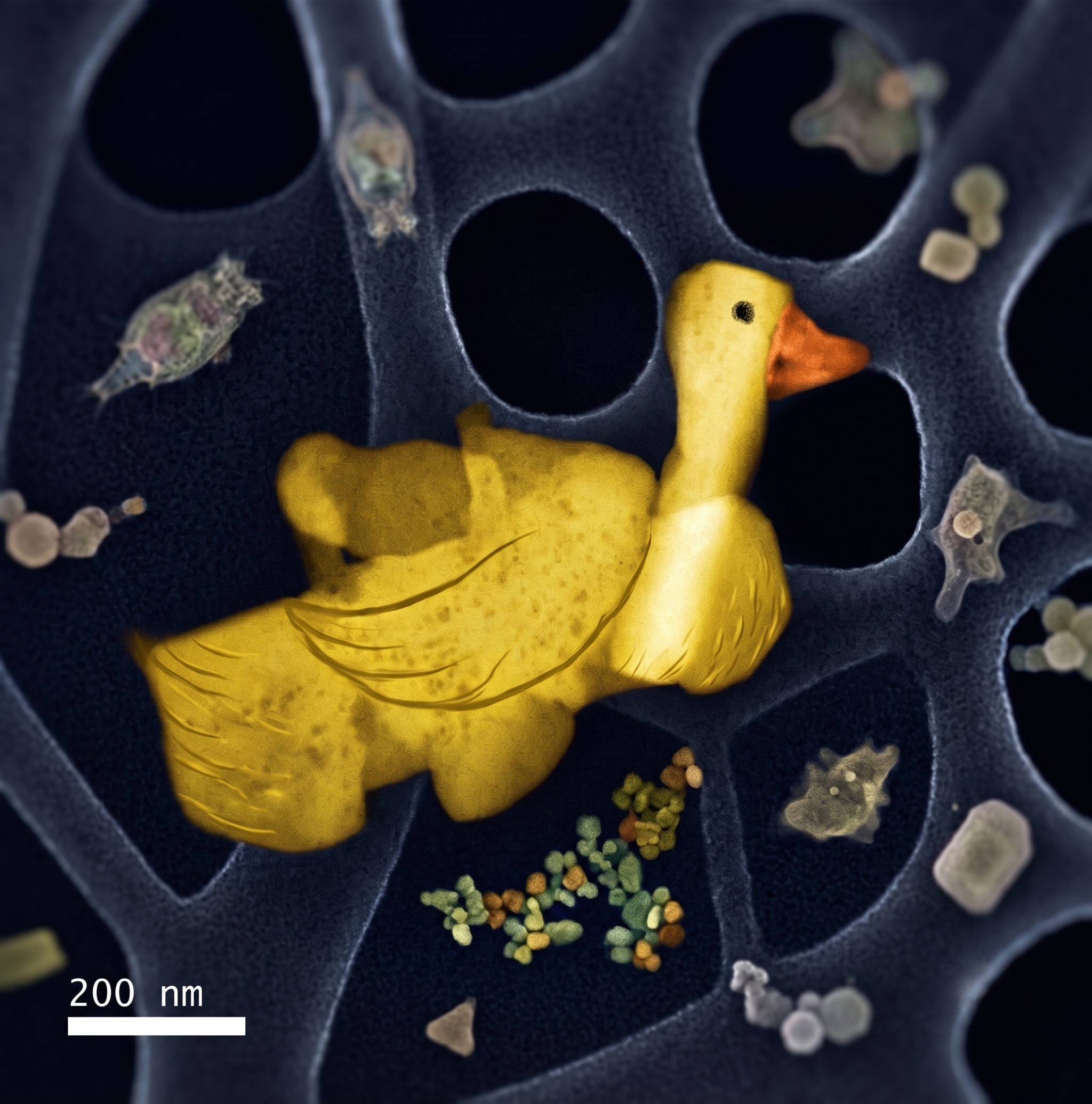
The Golden Nano-Duckling
Artists: Yongfa Cheng, Post doc, Dravid Research Group, Northwestern University
NNCI Site: Northwestern University-NUANCE Center
Tool: JEOL ARM200CF TEM
This image features a copper oxide (CuO) nanoparticle that serendipitously formed the unmistakable shape of a rubber duck. Captured under the EPIC TEM, the lacey carbon support grid is reimagined as a deep blue microscopic pond. Through traditional colorization techniques, the particle is brought to life as a golden duck swimming alongside imaginative micro-organisms, highlighting the playful and whimsical aesthetic hidden at the nanoscale.